
Tempered vs Laminated Glass: Which Should You Use, and Where?
5 min read · Published

Husseini Builders
Fabrication and installation specialists
- Glass types
- Comparison
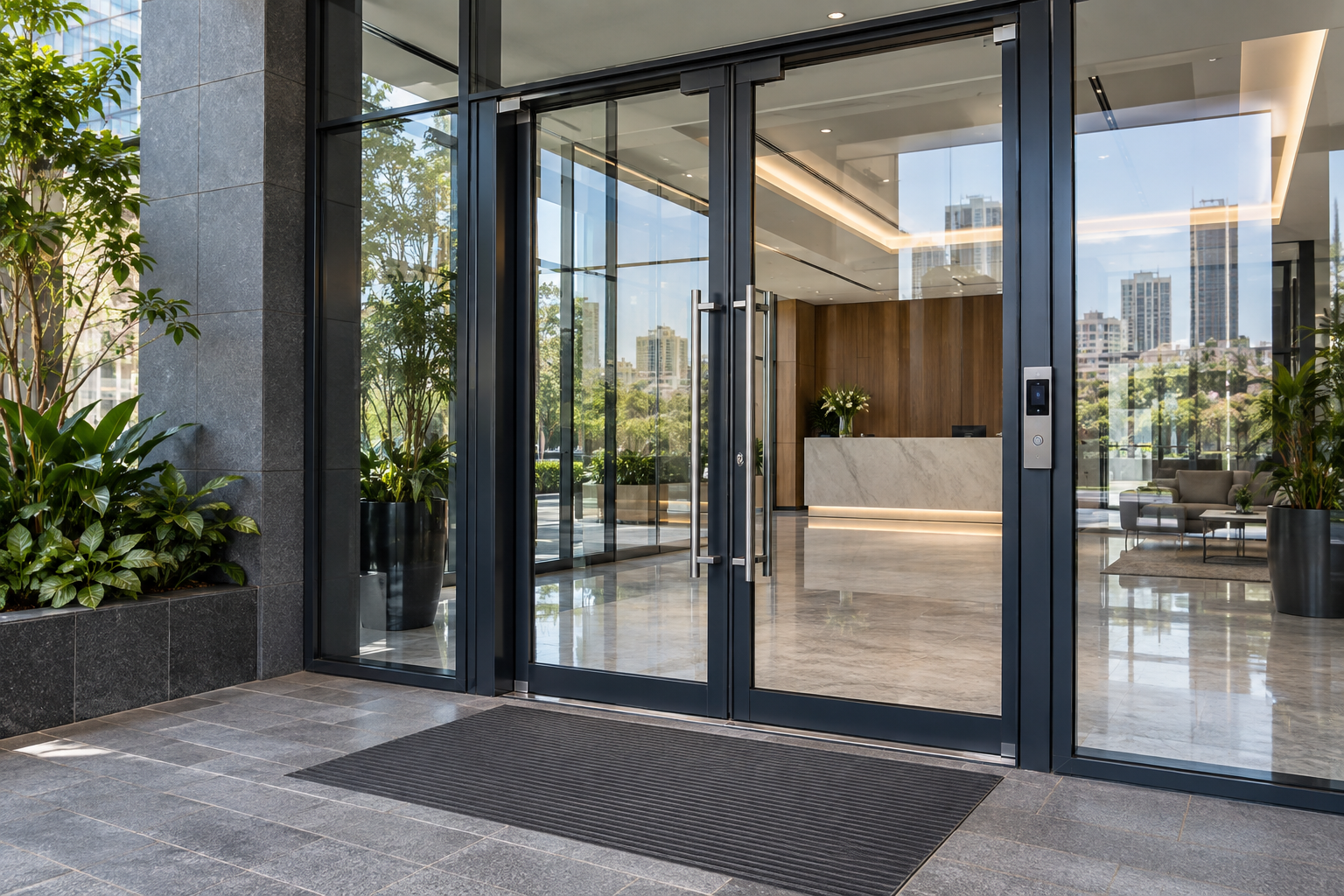
Tempered (toughened) glass or laminated glass? How each is made, how each breaks, and which to use for showers, balustrades, skylights, facades and security glazing in Kenya.
Tempered glass (also called toughened glass) is heat-treated to be several times stronger than ordinary glass and shatters into small blunt pieces when it breaks. Laminated glass is two or more panes bonded with a plastic interlayer, so it cracks but stays in one piece. Use tempered where strength and safe breakage matter, such as shower screens, doors and partitions. Use laminated where the glass must stay in place after breaking, such as skylights, security glazing and many balustrades. Laminated toughened glass combines both and is the right answer for many facades, balustrades and high-risk locations.
Both are safety glass. They are not interchangeable. This guide explains the difference and where each belongs.
How is tempered glass made, and how does it break?
Tempered glass starts as ordinary float glass, cut and edged to its final size, then heated to a high temperature and rapidly cooled. The surfaces cool and harden first, putting the outer faces in compression and the core in tension. That stress pattern is what makes it roughly four to five times stronger than untreated glass of the same thickness.
It also decides how it breaks. When tempered glass fails, the stored tension releases across the whole pane at once, and it crumbles into small, relatively blunt fragments rather than long shards. That is why it is safety glass: a broken tempered shower door is a mess, not a hazard.
One consequence worth knowing: tempered glass cannot be cut or drilled after tempering. Every hole, notch and dimension has to be finished before the glass goes into the furnace. This is why a site measurement before fabrication matters so much for tempered work; there is no adjusting it afterwards.
How is laminated glass made, and how does it break?
Laminated glass bonds two or more sheets of glass with an interlayer, most commonly PVB (polyvinyl butyral) or a stiffer ionoplast interlayer for structural and security use, under heat and pressure. The glass sheets can be ordinary annealed glass, heat-strengthened glass or tempered glass.
When laminated glass breaks, the interlayer holds the fragments together. The pane cracks, often in a spider-web pattern, but it stays in the frame and keeps out weather and intruders until it is replaced. That is its defining property: it fails safe by staying put.
The interlayer also adds benefits beyond safety. It reduces noise transmission, filters most ultraviolet light, and can be built up in multiple layers for security and bullet-resistant applications.
Tempered vs laminated: a direct comparison
| Tempered (toughened) | Laminated | |
|---|---|---|
| Strength against impact | Very high | Depends on the glass used; high when made with tempered layers |
| How it breaks | Crumbles into small blunt pieces | Cracks but stays in one piece |
| Stays in place after breaking | No, the pane falls away | Yes |
| Can be cut after manufacture | No | Yes, with limits, for annealed layers |
| Sound reduction | Minimal | Good |
| UV filtering | Minimal | High |
| Security | Resists impact but leaves an opening once broken | Resists penetration and keeps the opening closed |
| Typical uses | Showers, doors, partitions, tables, some balustrades | Skylights, overhead glass, security glazing, facades, balustrades |
Where should you use tempered glass?
Tempered glass is the standard for any glass that people can touch, lean on or walk into, where strength and safe breakage are the priority and where nothing sits beneath it to be hit by falling pieces.
- Shower cubicles and screens. Always tempered, never ordinary glass.
- Glass doors and door panels.
- Interior partitions in offices and homes.
- Glass tabletops and shelving.
- Some balustrades, where the design keeps the glass in place by its fixings even after breakage.
See: shower cubicles in Nairobi
See: glass partitions in Nairobi
Where should you use laminated glass?
Laminated glass belongs wherever the glass must not fall away if it breaks, or where sound, UV or security matter.
- Skylights, glass roofs and any overhead glass. If it breaks, it must not rain glass on the people below. Laminated is the only responsible choice.
- Security glazing for banks, cash handling areas, offices and homes. Multi-layer laminated glass resists forced entry and, in heavier specifications, ballistic attack, while keeping the opening sealed.
- Facades and curtain walls at height, where falling glass would be dangerous.
- Balustrades where retention after breakage is required, particularly frameless designs with no top rail.
- Anywhere sound reduction or UV protection is wanted, such as bedrooms facing a road or rooms with furnishings that fade.
See: security glazing in Kenya
When should you use laminated toughened glass?
Often, the best answer is both. Laminated toughened glass uses tempered sheets as the layers of a laminate. It has the impact strength of tempered glass and the stay-in-place behaviour of laminated glass. It is the usual specification for:
- Frameless glass balustrades and staircases.
- Facades and curtain walls.
- High-traffic doors and partitions in commercial buildings.
- Security glazing where strength and retention are both required.
It costs more than either on its own. Where safety at height or security is involved, that cost is well spent.
How do you tell them apart?
Tempered glass usually carries a small permanent stamp in one corner identifying it as toughened. Laminated glass shows a visible interlayer at a cut edge, a thin line between the glass sheets. If you are inspecting existing glass and see neither, treat it as ordinary glass and be cautious.
When commissioning new work, the specification should state the glass type and thickness in writing. If a quote says only "glass", ask.
Next step
Husseini Builders fabricates and installs tempered, laminated and laminated toughened glass in Nairobi, and specifies the right type for every location before quoting. If you are unsure which glass your project needs, ask us; we will tell you what belongs where and why.
Frequently asked questions
Is tempered or laminated glass stronger?
Which glass is better for security?
Can tempered glass be cut to size on site?
Which glass should a skylight use?
Is laminated glass soundproof?
Next step
See the solution this guide relates to, then book a free measurement with the form pre-set for you.
Related guides
Glass Partitions for Offices in Nairobi: Types, Benefits and What to Specify
Planning glass partitions for an office in Nairobi? The main types (framed, frameless, double-glazed), the benefits, privacy and acoustic options, safety markings, and what to put in the specification.
- Partitions and Corridors
Glass Facades and Curtain Walls: What Developers Should Know Before Commissioning
Commissioning a glass facade or curtain wall in Kenya? What developers and contractors should understand about systems, glass selection, engineering, installation and choosing a facade contractor in Nairobi.
- Facades and Curtain Walls
Frameless vs Framed Shower Cubicles: Which Is Right for Your Bathroom?
Frameless or framed shower cubicle? Compare looks, cost, glass thickness, waterproofing and maintenance to choose the right glass shower enclosure for your Nairobi home.
- Shower Cubicles