
How to Choose a Glass and Aluminium Contractor in Nairobi
5 min read · Published

Husseini Builders
Fabrication and installation specialists
- Trust pillar
- Choosing a contractor
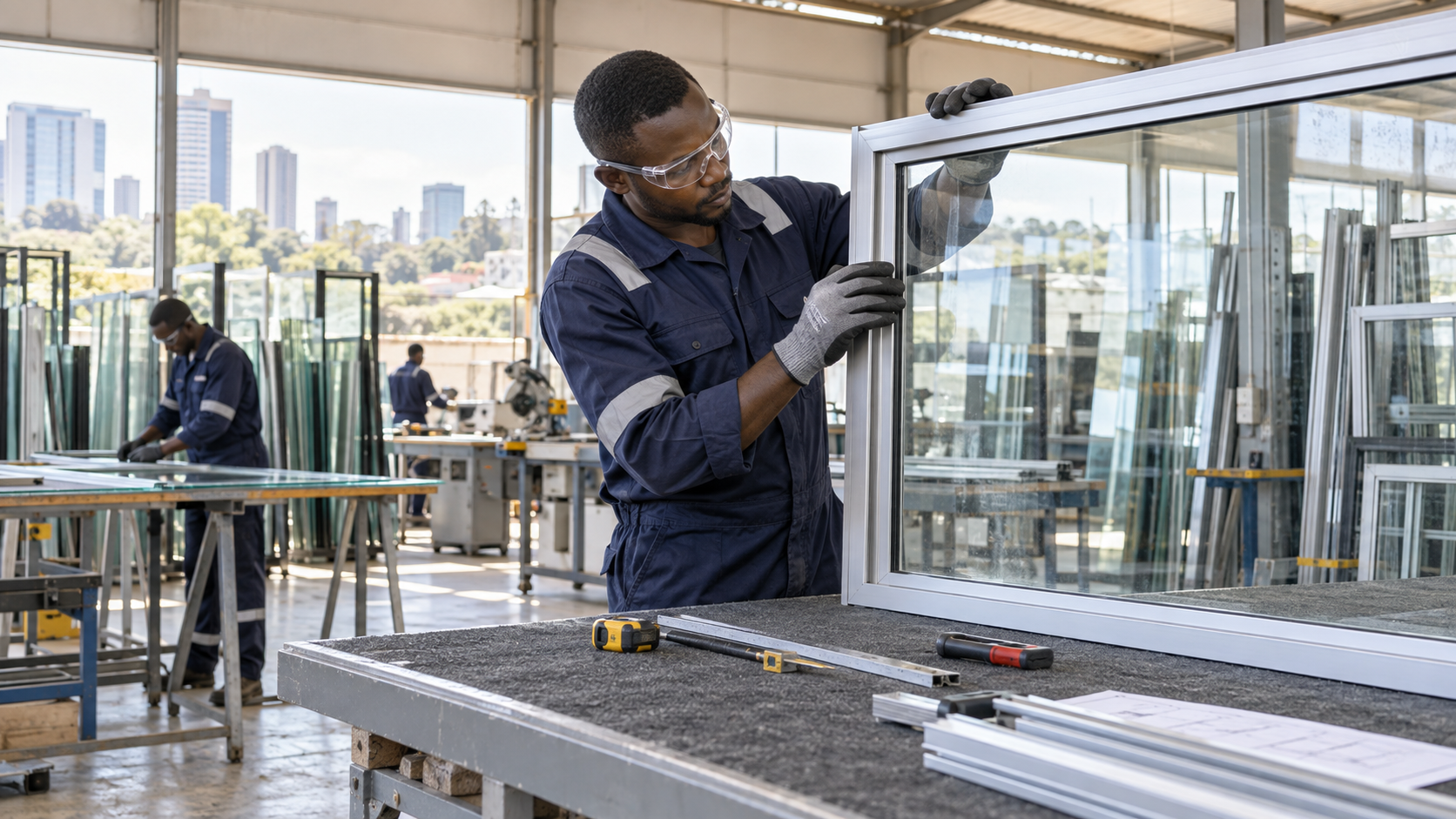
What to check before you hire a glass and aluminium contractor in Nairobi: track record, in-house fabrication, glass specification, warranty and more. A practical guide from Husseini Builders.
Choosing a glass and aluminium contractor in Nairobi comes down to six things: a track record you can verify, whether they fabricate in-house or resell someone else's work, the glass they specify for the job, a proper site measurement, a clear written scope with a warranty, and who actually turns up to install. Get those six right and most of what can go wrong with glass work never happens.
Glass is the part of a building that shows. A poor facade, a shower screen that leaks, a balustrade fixed to the wrong substrate, all of it is visible every day and expensive to redo. This guide sets out what to check, whether you are a homeowner fitting a bathroom or a developer commissioning a curtain wall.
Does the contractor fabricate the glass and aluminium themselves?
This is the first question, and the one most buyers never ask.
Many companies that sell glass and aluminium work in Nairobi do not make it. They take your order, pass it to a fabricator, add a margin, and manage the middle. That adds cost, adds a link in the chain where measurements and specifications get lost, and means the person you deal with cannot answer technical questions or control the timeline.
A contractor with its own workshop controls the cut, the finish, the hardware and the delivery date. When something needs adjusting, it goes back to the bench, not into a queue at a third party. Ask directly: where is the work fabricated, and can you visit the workshop? A genuine fabricator will say yes.
See: how Husseini Builders fabricates in-house
Can they show you real work, with names?
Any contractor can produce a brochure of glass buildings. Ask instead for projects you can identify and, ideally, visit or verify. A residential job in a named estate. A commercial fit-out for a business you can look up. A facade on a building you can drive past.
Then ask for a reference you can actually call. A firm that has done good work for demanding clients will not hesitate. One that hesitates is telling you something.
Longevity matters here too. A contractor that has been fabricating in Nairobi for decades has survived by getting difficult work right repeatedly. That history is worth more than a glossy website.
See: selected projects by Husseini Builders
Are they specifying the right glass for the job?
Not all glass is the same, and the wrong type in the wrong place is a safety problem, not just a quality one.
- Toughened (tempered) glass is heat-treated to be several times stronger than ordinary glass, and breaks into small blunt pieces rather than shards. It is the minimum for shower screens, doors, partitions and balustrades.
- Laminated glass bonds two or more panes with an interlayer, so it holds together when broken. It is used overhead in skylights, in security glazing, and wherever the glass must stay in place after impact.
- Laminated toughened glass combines both, and is the right answer for many balustrades, facades and high-risk locations.
A competent contractor will tell you which type, what thickness, and why, before quoting. If a quote just says "glass", ask what kind. If they cannot explain the choice, walk away.
See: tempered vs laminated glass explained
Will they measure on site before quoting?
Glass does not forgive guesswork. Walls are rarely perfectly square or plumb, floors are rarely level, and openings on a drawing are rarely the openings on site. A shower cubicle or a partition made to a drawing rather than a measurement will not fit cleanly, and "making it fit" on the day means gaps, sealant and compromise.
Insist on a site measurement before the final quote and before fabrication. It is a sign the contractor intends to make the piece properly rather than approximately.
Is the scope written down, with a warranty?
A verbal quote is not a scope. Before you commit, you should have in writing:
- Exactly what is being supplied: glass type and thickness, aluminium system or profile, hardware, finish and colour.
- What is included in installation, and what is not (making good, removal of old work, disposal).
- The timeline, from measurement to fabrication to installation.
- The payment terms.
- The warranty: what it covers, for how long, and who honours it.
For larger projects, particularly commercial and institutional work, also ask about registration with the relevant construction authority, insurance, and whether the contractor has completed comparable work to specification before. Developers and corporate buyers should expect a contractor to produce this without friction.
See: glass and aluminium for developers and contractors
Who actually installs it?
Fabrication is half the job. Installation is where glass work succeeds or fails. Ask whether the contractor uses its own installation crews or subcontracts. A firm that fabricates and installs with the same team carries one line of accountability from the first measurement to the final clean. If a problem appears later, there is one phone number to call and no argument about whose fault it is.
A short checklist
Before you sign with any glass and aluminium contractor in Nairobi, confirm:
- They fabricate in-house and you can visit the workshop.
- They can name real projects and give a reference you can call.
- They specify the glass type and thickness, and can explain why.
- They measure on site before fabricating.
- The scope, timeline, payment terms and warranty are in writing.
- Their own crews install and stand behind the work.
Next step
If you are planning glass or aluminium work in Nairobi, Husseini Builders has fabricated and installed it in-house for over three decades, for homes, businesses and institutions. Tell us about your project and we will arrange a site measurement.
Frequently asked questions
How do I know if a glass company in Nairobi is genuine?
Is it cheaper to buy from the fabricator directly?
What glass should a shower cubicle use?
Should I get a site measurement before a quote?
What should a glass installation warranty cover?
Next step
See the solution this guide relates to, then request a quote with the form pre-set for you.
Related guides
Glass Facades and Curtain Walls: What Developers Should Know Before Commissioning
Commissioning a glass facade or curtain wall in Kenya? What developers and contractors should understand about systems, glass selection, engineering, installation and choosing a facade contractor in Nairobi.
- Facades and Curtain Walls
Frameless vs Framed Shower Cubicles: Which Is Right for Your Bathroom?
Frameless or framed shower cubicle? Compare looks, cost, glass thickness, waterproofing and maintenance to choose the right glass shower enclosure for your Nairobi home.
- Shower Cubicles